
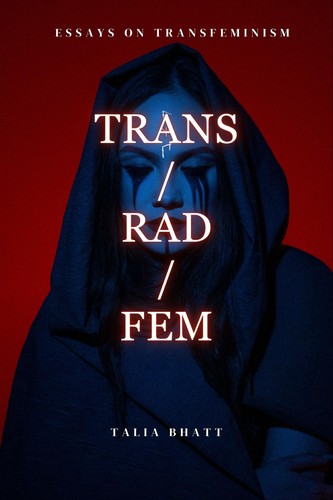
Trans/Rad/Fem
by Talia Bhatt
Why we picked it
A strong pick for readers interested in feminist theory, trans politics, and intellectual history. It offers a provocative reexamination of radical feminism and makes a clear case for its links to transfeminism.
About this book
In this nonfiction collection, Talia Bhatt revisits the long-running tension between trans liberation and feminism and argues that their connection was mapped out many years ago. The book starts from the common view that second-wave and radical feminism are tied to trans exclusion, especially in current debates around gender-affirming care and the place of trans women within feminist politics.
Bhatt asks readers to look again at that history. She points to strands of radical feminist thought that challenged biological determinism, treated gender as socially produced, named patriarchy as a system bound up with compulsory heterosexuality, and imagined life beyond fixed gender roles. Through these essays, she presents transfeminism not as an opponent of radical feminism but as something that grows out of it, building toward a materialist analysis of trans oppression and a broader challenge to patriarchy at its foundations.
3 things you’ll take away
- A fresh look at the history linking transfeminism and radical feminism.
- Clear ideas on gender, patriarchy, and how social systems shape oppression.
- Essays that challenge simple stories about feminism and trans liberation.
Is it for me?
Details
- Author
- Talia Bhatt
- Genre
- Other Non-fiction
- Published
- January 24, 2025
- Publisher
- Independently published
- Pages
- 167
- Reading time
- About 3 hours
- ISBN
- 9798224886203